Stiamo aspettando di ricevere il codice CIN - Questa struttura è temporaneamente non presente su Agriturismo.com
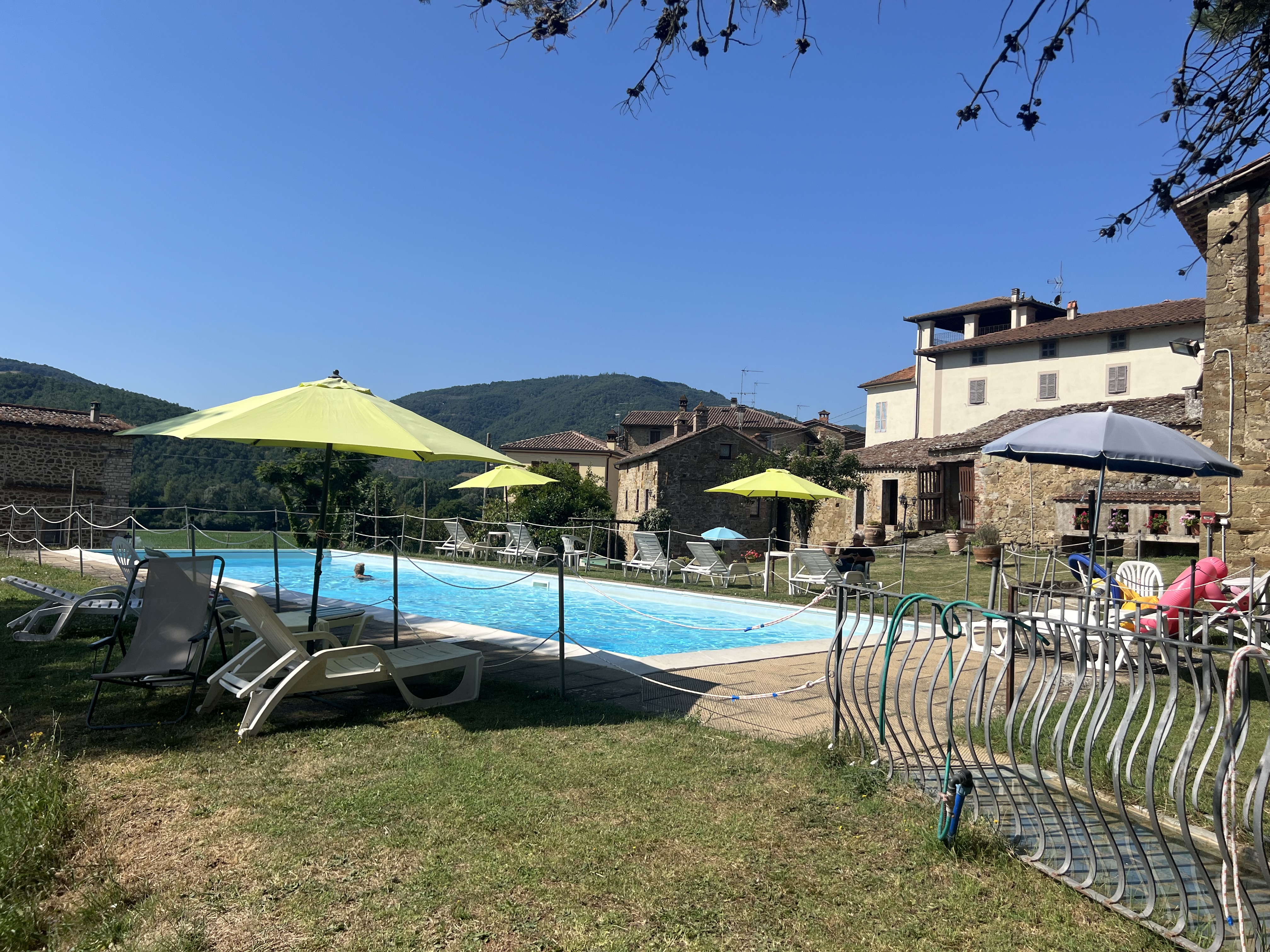
Swimming pool
Pets allowed
Local products
Disabled
Cycle tourism
Trekking
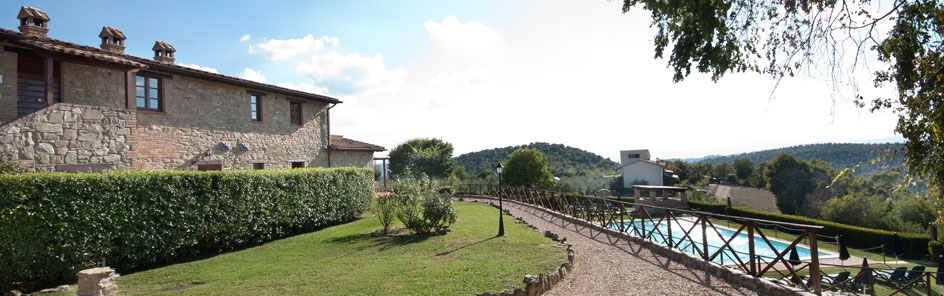
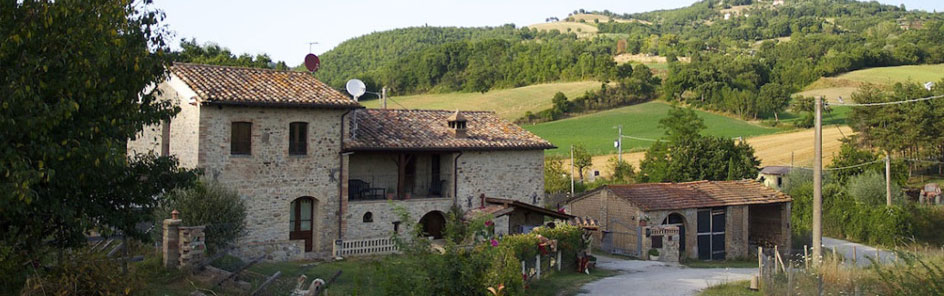
In a privileged place for the natural, archaeological and cultural resources, the agriturism "Al Vecchio Pozzo" is in a hill area in front the Subasio montain and offer a beautiful view on the green hills from Bettona to Assisi and Spello.
The agriturism "Al Vecchio Pozzo" is the perfect place for relax and enjoy whit family and friends, inviting the turist to visit our magnificent region.
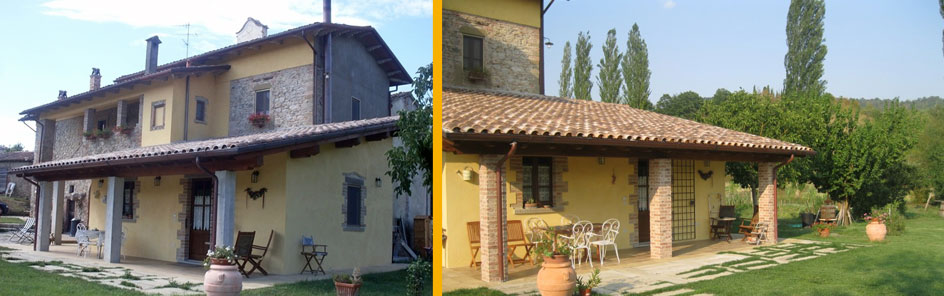
The agriturism is open all year and offer 4 apartments with central heating for every flat where loving couple, family and small group of people can find relax and good time.
Internal Services: Wifi, Heating, TV sat, Final cleaning, Acces Internet, Phone in room, TV in room, Daily cleaning
External services: Barbecue, Rental Bikes, Car park, Park
Experiences: Cycle tourism, Trekking
We have for our guests also a swimming pool with view and bicycles to visit the countryside.
Bank, pharmacy are very close.
Where we areCannara - 3 km
The first records of an inhabited settlement in Cannara area go back to around the Ist century B.C. This is probably the date of the town's foundation, but one believes that the settlement which the Romans called "Castrum Canarii", became a real town only after the barbaric invasions in Italy. The toponymical analysis reminds us that, when Valerio Ranieri built the castle, the area was known for its swamps and marshes abbundantly covered by canes. Fought over between the end of the of the 13th century and the middle of the 14th century by the Guelfs and the Ghibellins, it was first subjected to the rule of the Duchy of Spoleto and afterwards, after it had been a strong-hold of the Breton soldiers around 1400, to that of the Papal State.
Bevagna - 8 km
The ancient small town of Roman origin called Bevagna is to be found on the western fringe of the Foligno plain. In Piazza Silvestri, you absolutely should not miss the Gothic Palace of the Consuls, situated singularly slantwise to the streets, amd the churches of St. Sylvester (1195 d.C.) and St. Michael Arcangel; the fountain which completes the scene of this exceptional public area is, however, an adaptation dating back to the 19th century. Even today, the medieval town portals, even after reconstructive measures such as those of the Porta San Venanzo in 1797, and long stretches of the old town walls, are in a good state of preservation.
Spello - 11 Km
Among the neighbouring cities, this is surely the one which preserves the major number of monuments testifying to the Roman era; for example, the town walls, which later became the foundations for the medieval walls, the ruins of the theater and the amphitheater, the thermal baths and the splendid town portals Porta Consolare, Porta Urbica and Porta Venere dating back to the Augustean era. In ascent, you'll arrive at the church of St. Mary Maggiore. In fact, the marvellous Baglioni Chapel. Close by, it is possible to visit the church of St. Andrew. Don't forget to take a look at the Town Hall in Piazza della Repubblica with its beautiful ogival portico, and the church of St. Laurence.
Assisi - 14 Km
Assisi's oldest nucleus, which is protected by a defensive apparatus made up of eight fortified entrance portals and a long belt of town walls, which are still perfectly preserved, is topped by two castles on peak of the mountain: the Major Castle and the Minor Castle. Apart from religious buildings too important to not be considered solely the heritage of Assisi such as the basilica of St. Francis, the tourist can also visit the churches of St. Clare and St.Peter. The Cathedral, dedicated to the Patron Saint St. Rufino, vaunts a splendid and unaltered facade with sculptures and reliefs. On the Town Square situated on the ancient Forum, you will find the Priors' Palace (1337), the Palace of the People's Captain (12th century) and the temple of Minerva, built during the augustean period with pronaos, columms and corinthian capitals which are still intact. Nearby, places which are connected with the life of St. Francis can be visited, sich as the Eremitage of the Prisons, immersed in a thick wood of oaks and ilex on the slopes of the Subasio Mountain, and the convent of St. Damian, which was built up around the oratory were, according to tradition, the Cross spoke to the Saint.
Montefalco - 15 Km
Montefalco offers the viewer of a sweeping panorama of the Umbrian countryside. The buildings inside the ancient town walls which are definitely worth visiting are, without doubt, the Town Hall, which dates back to the 13th century, as does the church of St. Augustine, the Romanic church of St. Bartholomew with the Portal of Frederick II (1244) to be found near-by and the church of St. Chiara. You absolutely should not forget to visit the 14th century church of St. Francis, which is now the seat of the Pinacoteque.
Foligno - 16 Km
Foligno is one of the very few Umbrian cities built in the plain. Very probably, the most significant part of one's stay at Foligno is a visit to the Piazza della Repubblica and the adjoining Piazza Duomo. The former, in its present-day appearance, with its elongated shape and the junction of four streets at the corners was planned according to the lay-out popular in the 12th and the 13th centuries for many Umbrian town squares. The Cathedral and the Town Hall, the Pretorio Palace, the Orfini Palace (1515) and the Trinci Palace, which preserves traces of the original beautiful decorations and some rooms with valuable frescoes, look down on the square.
Todi - 40 Km
Beside the legends about the origins of Todi, the town was founded by the Umbrian people on 2700 before Christ. Later on, before the etrurians and after the romans held the power of the town, and building up a number of monuments, most of which can still be admired, like the Nicchioni Romani, on Mercato Vecchio square, which at the beginning were probably part of a basilica. On the XII century it bacame free commun, being this the onset of a very positve period, and marvelous monuments like Capitain Palace, il Priori Palace, the Dome and the very remarkable St. Fortunato Church were built.
fotodintorni
Spoleto - 46 Km
Spoleto, even if shows evident traces of the Roman era even in its urban structure, substantially mantains a medieval appearance, due to the period in which it was first a flourishing longobard Duchy, and then an important city within the Papal State.
Gubbio - 75 Km
Laying on the slopes of Monte Ingino, Gubbio is one of the most ancient towns of Umbria, extremely well preserved during centuries and rich of monuments testifying its glorious past. Two important witnesses of the past are the Tavole Eugubine, one of most important documents referring to the ancient people called Italici and the Roman Theatre just outside the walls of the town. Dominated from the top by the Basilica on which the rests of St. Ubaldo are buried, Gubbio keeps architectonic masterpieces testifying the beauty and the imprtance of what used to be during the Middle ages, a real town-state.
 Send to your email





 Swimming pool
 Pets allowed
 Local products
 Disabled
 Cycle tourism
 Trekking




 EN
EN IT
IT DE
DE FR
FR ES
ES